
A practical example: a service firm adding one new offer
A bookkeeping firm launching a short-term year-end cleanup can send its email campaign to one page showing the offer, fit and request form. A new prospect comparing ongoing bookkeeping, payroll and reporting needs a site with separate answers for each service.
Keep the campaign page focused on its offer. Publish the long-lived service information on the main website and link to it where a visitor needs more background. Both can use the same branding and routing.
Use the comparison to decide which type of project to request first.
Discuss a campaign landing page| Decision | Landing page | Website |
|---|---|---|
| Main task | Explain one offer and action | Explain the business and several services |
| Typical route | Campaign, email or specific offer link | Navigation, service research and organic discovery |
| Scope driver | Offer, copy, form and integrations | Page types, content, navigation and integrations |
The decision starts with the customer’s task
A landing page and a business website can both help someone make contact, but they usually serve different stages of a decision. Choose by asking what the visitor needs to learn before acting. A reader who clicks an email invitation may only need the offer, date and registration form. A person comparing three services may need room to understand fit, process and evidence. List the questions that stand between arrival and action. If they relate to one offer, a focused page may cover them well. If they lead to several distinct decisions, a small site usually provides a clearer structure.
When a landing page fits
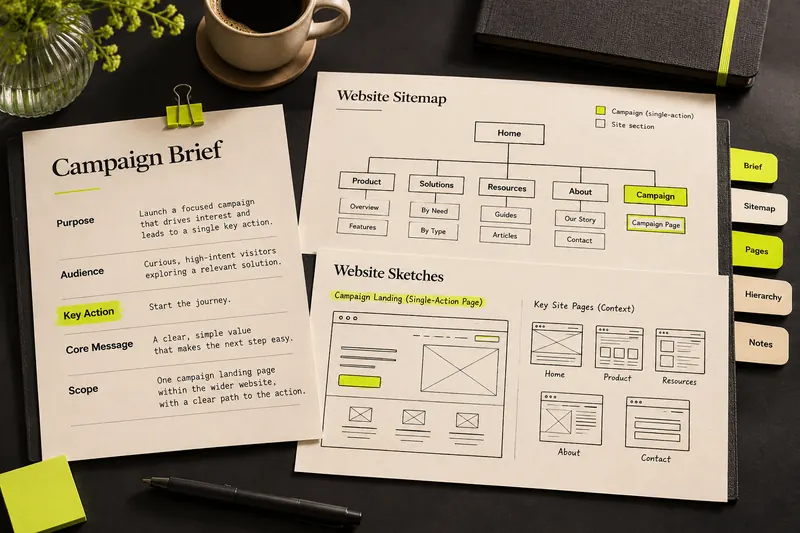
A landing page works well for a campaign with one audience, a defined message and a primary action. Examples include a service consultation, event registration or a specific product introduction. Match the opening headline to the message that brought the visitor there. Include enough context for someone to recognize the offer, understand what is included and choose the next step. Keep supporting proof close to the claim it supports. A focused page still needs privacy information and a clear explanation of what happens after the action. Its usefulness comes from resolving one decision without making the visitor navigate a larger site first.
When a website earns the extra pages
A business website helps readers compare offers, understand the organization and find different kinds of information. A small firm may need a homepage, several service pages, an about section and an inquiry path. Those pages have distinct jobs. A service page explains fit and deliverables. The homepage introduces the business and routes visitors to the right offer. A resource can help someone decide what they need before requesting a quote. Give each URL a purpose you can express in one sentence. If two pages answer the same question with the same examples, combine them until the difference is meaningful.
How the two can work together
A campaign page can sit alongside a wider website. The permanent site gives the business a stable set of service descriptions and proof, while a campaign can test a different offer or audience. Link to relevant details when they help the visitor decide, but keep the primary action clear. A campaign for a website audit, for example, can describe the review and collect a URL while linking to a redesign service for readers who already know they need a rebuild. Decide how each page will be measured so campaign inquiries can be distinguished from the wider site’s general project requests.
Organic search needs a useful destination
A landing page can be searchable when it answers a distinct query and remains useful beyond a short promotion. A service page can support organic discovery when it explains the offer in enough detail and receives relevant internal links. The number of pages alone does not establish search value. Check whether the page matches the question people are asking and whether another page on your site already answers it. Use a descriptive title, one clear primary heading and a canonical URL. A short-lived campaign may need different index controls, especially when it duplicates a permanent offer, so review its purpose before launch.
Budget depends on the work behind the page
A single page can require substantial writing, design and integration if the offer or conversion path is complex. A small website can be simpler when the brand, copy and reusable layout are already established. Compare the scope rather than counting pages alone. Identify who writes the content, who supplies images and whether a booking tool or CRM needs to be connected. Include testing for confirmation and failure states. Ask which elements can be reused in future campaigns. A useful first release may focus on the core offer while keeping optional features and additional content in a later phase.
The form should fit the promise
Ask for the information needed to deliver the action you describe. A free review request may need a website URL and the main challenge. A detailed project estimate may need more about scope and timing. Label required fields clearly and explain what happens next. Verify that a successful submission reaches the intended recipient and that failures give the visitor a recovery path. Keep personal form content out of analytics. A measurement event should indicate that an action succeeded without including a person’s name, email or message. Test on a phone as well as desktop because a usable layout does not always produce a usable form.
Compare the options with a concrete example
Imagine a consultant launching a workshop while maintaining an advisory service. A workshop campaign needs a focused page with the topic, audience, date and registration action. The advisory service needs a page explaining the engagement, scope and the kind of client it suits. Both can share brand elements and a site navigation, but they should have separate purposes and clear labels. If the consultant has only one offer at launch, the initial site could be a focused page with enough context to answer buying questions. Add more pages when the business has distinct information to share and a way to maintain it.
Choose an upgrade path before the first release
Record what might change in the next few months. You may introduce a second service, publish approved projects or connect a booking system. Choose a setup that can support those needs without building every feature now. A landing page can become part of a wider site when the original URL still serves a useful purpose. Preserve relevant links and plan redirects if the address changes. Assign an owner for content updates and make common edits part of the handover. A small first release is easier to expand when the page structure and ownership decisions are clear from the beginning.
Questions to answer before requesting a quote
Where will visitors come from? What should they do? What must they understand before they act? What evidence can you publish? Which tools need to receive the inquiry or booking? Write down the answers and share an example of the current path if one exists. Tell the agency whether the budget is fixed and which parts of the brief can wait. A landing page proposal should explain how the offer and action will be tested. A website proposal should explain page purposes, templates and how future changes will be managed. Use those deliverables to compare the options and choose a first phase.
Plan the destination before the campaign
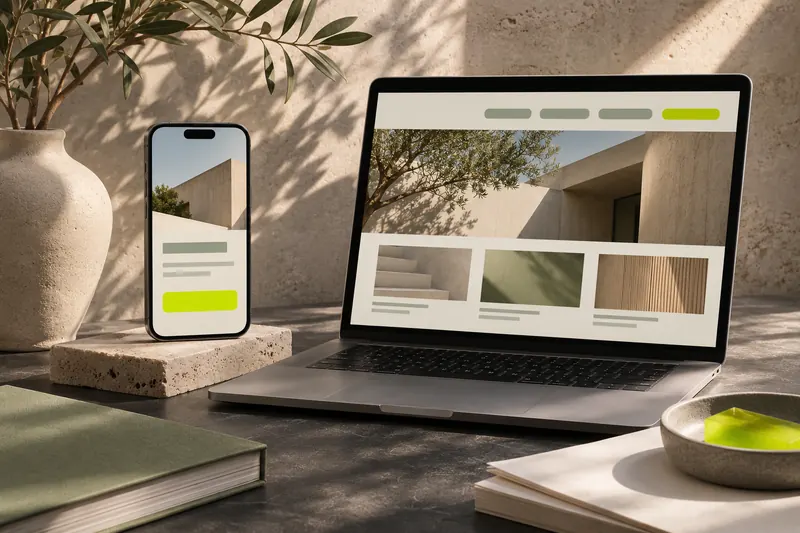
List the questions someone must answer before contacting your business. A focused campaign may need one offer, one audience and one action. A broader service business may need several connected pages so buyers can compare options and understand who will deliver the work.
Use the campaign message and the destination together during review. The page should explain the offer introduced by the link and make the next step clear on mobile. Test the form, confirmation and destination inbox as part of the launch scope.
If you are comparing build options, organize the one-time and ongoing costs before choosing a scope. Our first-website budget worksheet helps you record content responsibilities, supplier renewals and practical launch checks. Explore the related guide or service.
Browse the complete blog library
Updated .