Audience & context
Review who buys, what they need to decide and which alternatives they consider. Distinguish what you know from assumptions that still need customer research.
BRAND STRATEGY / BEFORE THE DESIGN DECISIONS
A brand becomes difficult to explain when every audience, service and benefit receives equal weight. We help clarify who you are speaking to, what makes the offer relevant and which message should lead, so design decisions have something concrete to answer.
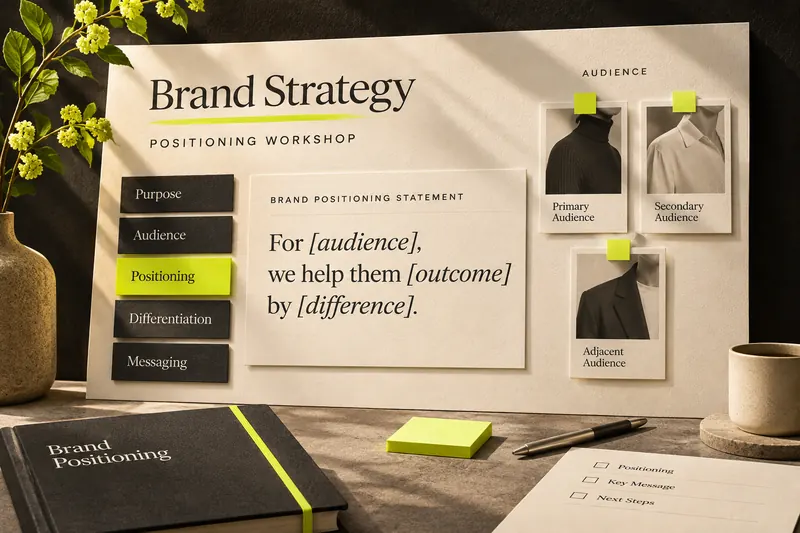
Consider a consultancy that serves growing businesses but gets inquiries for one-off tasks. Its positioning can prioritize the larger engagement by naming the buyer, the decision they face, the scope and evidence that supports the offer.
Turn the position into a message hierarchy: an opening promise, the reasons to believe it and a clear description of fit. Then test that hierarchy on a real sales page before commissioning the full identity or website.
Bring your current offer, a recent sales question and what prospective customers usually compare you with.
See a worked example of a brand strategy briefThe scope
Review who buys, what they need to decide and which alternatives they consider. Distinguish what you know from assumptions that still need customer research.
Choose the role the brand should occupy and the reasons a suitable customer might prefer it. Claims need evidence; broad adjectives are not a competitive difference.
Translate the direction into a message hierarchy and representative examples. A homepage, proposal introduction or service description makes the strategy easier to test.
A considered process
The working detail
Use these questions to prepare a more useful brief and compare the work behind a proposal.
Brand strategy is useful when a business needs to decide whom it serves, what it should be known for and how to explain the offer consistently. Bring the decision you need to make. It may be choosing a primary audience for a new service, clarifying a confusing service list or preparing a company for a broader rebrand. Identify what the project can change and what must stay in place. A short strategy engagement can resolve a specific decision, while a broader one may involve reviewing multiple offers and gathering input from sales, leadership and customers.
Review recent inquiries, proposal feedback, public reviews and recurring sales questions where you have permission to use them. Look for situations that bring buyers to the company: a deadline, a change in team, a tool that no longer works or a newly recognized problem. Separate what customers said from what the business assumes they want. Identify which situations produce suitable projects and which lead to work the team cannot support. This helps define the audience using circumstances and needs rather than broad categories. Record gaps that could change the recommendation so the team knows what to validate later.
A buyer’s alternatives may include another agency, hiring internally, postponing the work or using a simpler tool. Review what each alternative makes easier and where it creates tradeoffs. Ask which of those alternatives comes up in sales conversations. Use public descriptions and documented examples so comparisons can be checked. This exercise should give the team a concrete way to explain why its offer fits a particular buyer. A claim such as “we deliver clarity” needs evidence about the service, for example a specific deliverable, a decision milestone or a process that a prospective customer can understand.
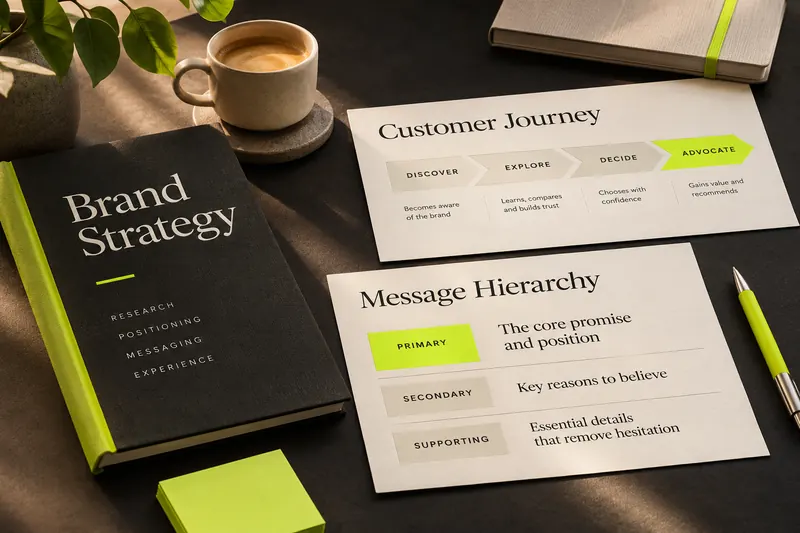
Use a short internal statement that identifies the audience, the situation and the practical benefit. Add a few reasons to believe it. Separate the statement from the public headline so the team can assess the strategy before debating phrasing. A public version might explain how a service helps an owner launch a focused website on an agreed scope. The internal version can record which buyers are a poor fit. Test the statement against representative inquiries. If most would still be equally suitable under several different versions, make the audience or offer more specific.
Turn the strategy into a simple hierarchy. Include a one-sentence explanation, key benefits, supporting evidence and answers to recurring objections. Demonstrate how it appears in a homepage introduction, proposal and short sales email. Keep a record of approved facts and placeholders for proof you still need. If a claim requires data or a client’s permission, identify who can supply it. Give the team a short vocabulary guide for terms customers use and terms that create confusion. The result should make it easier to write new material without having to reinvent the offer each time.
Strategy clarifies the audience and offer. Identity design creates visual assets that express those choices. You can commission strategy first if the business is unsure how to explain a new direction. If the offer is already settled and you need consistent assets, identity design may be the better starting point. When both are in scope, make the approval handoff explicit. The identity team should know the preferred audience, the channels they need to design for and what the work must preserve. This avoids asking visual concepts to solve an unresolved business decision.
Start with one audience, one offer and a small set of materials if your budget is limited. Share existing research and identify who can describe recent wins and lost opportunities. Decide which outputs you need immediately, such as a positioning brief and website messaging, and which can wait, such as a wider naming exercise. Agree on who reviews the work and when. If the project relies on interviews, clarify who recruits the participants and how insights will be documented. The quote can then reflect the decisions you need and the amount of research required to reach them.
Try the new messaging in a real sales conversation, page or proposal. Record which questions still need explanation and which descriptions prospects repeat back accurately. Check whether team members can describe the offer consistently without memorizing a script. If the message attracts the wrong inquiries, review whether the audience, benefits or examples imply a different offer. Revisit the strategy when the business changes direction or the evidence conflicts with what you expected. Keep a brief version for daily use and a record of the decisions behind it for later revisions.
Ask for the approved statement, the evidence behind it and a few examples of how it changes existing material. Give the internal owner a way to distinguish decisions that are settled from open questions that need research. Set priorities for the rollout. A company might revise a proposal and a service page before changing the rest of the site. Identify any visual or operational dependency, such as a new service description or a change in how the team qualifies prospects. Strategy has practical value when it helps staff make decisions about the next thing they publish or build.
A useful bridge from strategy to design is an outline of the first few pages. Give each page an audience question, a specific promise and a piece of evidence that supports it. For a business with several offers, show where a reader should go to compare them and where to request help choosing. Use actual buyer language in navigation so the positioning works without an explanation from the sales team. Read the outline back to someone who was not in the strategy meetings. Their questions can expose assumptions before the team spends time on full copy and design.
Questions & answers
Your current offer, customer types, sales questions, competitors and examples of how you describe the business. Actual customer feedback is especially useful. We identify research gaps rather than inventing an audience.
Those are separate implementation scopes. Strategy can inform identity and website design, but the agreed strategy outputs should be clear even if the visual work happens later.
Review it against a real task: explaining a service, answering an objection or writing an opening page. If your team cannot use the direction in an ordinary customer conversation, the work needs more clarification.
Enquiry sent
Thanks for sharing your project with us. We’ll reply to the business email address you provided.
Prefer a direct line?