
Local SEO Checklist for U.S. Small Businesses
Review local SEO foundations with a practical checklist for service pages, genuine location information, mobile contact tasks and Search Console measurement.
Read the guideStrategic Web Agency blog
Practical guides to planning, redesign, search visibility and the customer journey. Start with the decision in front of you.
Review local SEO foundations with a practical checklist for service pages, genuine location information, mobile contact tasks and Search Console measurement.
Read the guide
Plan your first website budget with a page checklist, first-year cost worksheet and practical questions for comparing small-business web design quotes.
Read the guide
Write a useful website redesign RFP with page inventory, content ownership, migration requirements, budget questions and launch acceptance checks.
Read the guide
Audit your website's user experience with a repeatable customer task. Check mobile headings, navigation, service information, forms and inquiry delivery.
Read the guide
Build a clear message hierarchy with a practical service-page example. Choose the main promise, then add proof and answers buyers need.
Read the guide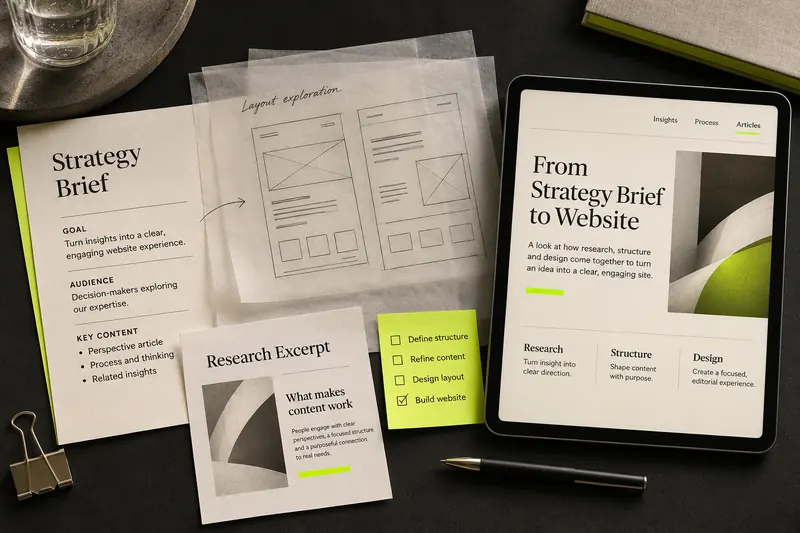
See how to turn research and project constraints into a brief with one decision, an example and a way to test it.
Read the guide
See when a single campaign page works, when you need a multi-page website, and how the two can work together.
Read the guide
Movement can explain a change or compete with the content. This guide looks at visual rhythm, mobile reading, reduced-motion preferences and practical task testing.
Read the guide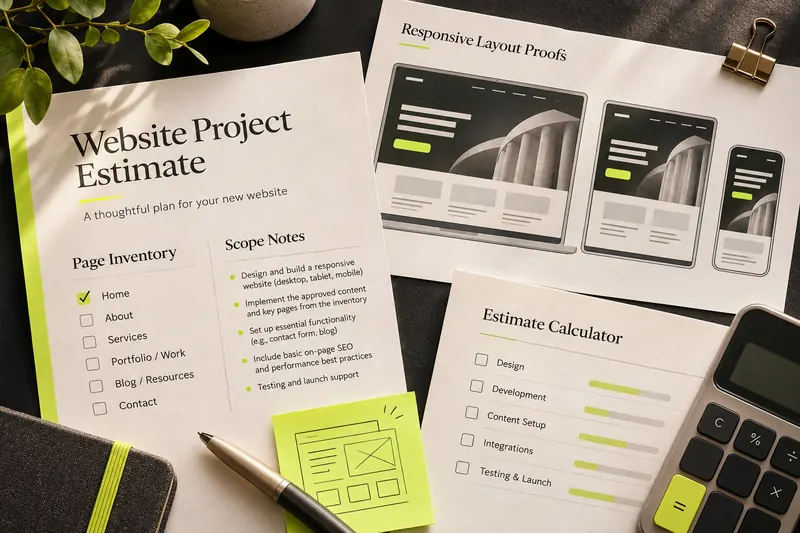
Compare redesign quotes line by line. Identify the cost drivers, launch responsibilities and exclusions before you sign.
Read the guide
Plan your redesign migration, preserve important URLs and check redirects, canonicals, forms and indexing after launch.
Read the guideA website project usually begins with a question about the business. You may need your first site, a clearer explanation of existing services or a better route from a visit to an inquiry. These guides organize those decisions into practical tasks you can bring to a project conversation.
If you are planning a first site, begin with the budget worksheet and the landing-page comparison. If you already have a website, use the redesign and UX resources to decide which parts need work. The SEO checklist helps you connect those pages with genuine service and location information.
Start by listing the services you want to explain and the action a visitor should take. Decide which information you can supply and who will approve it. The budget guide helps you separate the build from content, media and recurring supplier costs, giving you a more useful basis for comparing proposals.
You can then review small business web design and website project scopes. Bring your page list, existing assets and comfortable budget range so the conversation can focus on a complete first phase.
A redesign affects more than the appearance of the homepage. Useful content, search entry pages, forms and operational tools may all need attention. The RFP guide helps you record those needs, while the migration checklist gives you questions to discuss before URLs or platforms change.
The existing journal guides remain available at their original addresses. They are included here so you can move between cost, migration and design decisions without having to search through separate collections. Each article links to related services and the next useful planning step.
Use the UX audit guide when the website gets visitors but the next action is hard to understand or complete. Work through a specific task on a phone, record the friction and define the expected behavior. A focused list of findings can help you decide whether targeted changes are enough.
Our UI/UX design service and website optimization service explain how that review can lead to a practical scope. You can also request an initial public-page audit and tell us which task matters most.
Use observed customer questions and search queries to decide which pages deserve attention. A clear service page can answer a buying question, while a guide can help someone prepare or compare options. Internal links should help the reader move between those stages.
Our SEO service describes research, page planning and implementation. The local SEO guide covers accurate service information, genuine local relevance and practical checks. We use Search Console evidence where available to review the searches and pages relevant to the intended audience.
Send your URL, audience and priority service to Ryan. Explain the decision you are trying to make and add any fixed launch date. If you already have content or brand assets, tell us what is approved and available.
We can discuss a focused first phase and provide an itemized quote in USD. A useful project brief gives both teams a shared starting point, and these resources help you prepare the facts, questions and acceptance checks needed for that conversation.
Keep a note of the pages, assumptions and account responsibilities you identify while reading. Add the questions that apply to your business and mark the facts that still need an owner. Bring that list to the project conversation so it can become part of the agreed scope.
When a guide references a platform rule, follow the linked official source for the current detail. The articles provide planning context and examples. Your project brief records the decisions that apply to your website, including the content you approve and the launch checks you expect to see completed.
Share your website, audience and priority. We will discuss a focused scope and quote in USD.
Enquiry sent
Thanks for sharing your project with us. We’ll reply to the business email address you provided.
Prefer a direct line?