
Design around a task your customer needs to finish
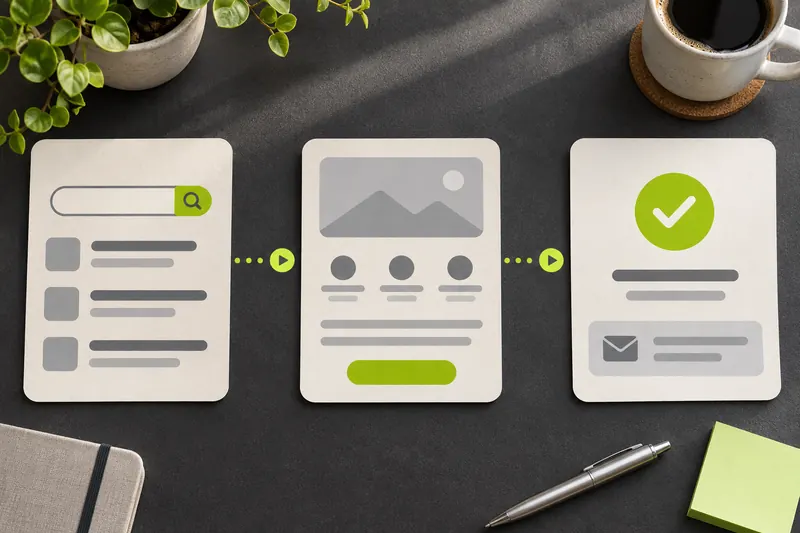
Our UI/UX design service helps small businesses organize website information and improve the steps that lead to an inquiry. We start with a practical task, such as comparing services, checking whether a project is a fit or requesting an estimate. That task gives the design work a purpose and gives you a way to review the result.
Strategic Web Agency is based in New York and works with businesses in the United States and internationally. You can begin with an existing website, a rough page plan or a specific customer problem. Send the URL and describe what people need to do. We use that information to discuss whether a focused review, a prototype or a wider design project is appropriate.
UX and UI each have a role
User experience work examines how the page structure, information and interactions support a task. Interface design develops the visual components people use to complete that task. A clear service menu, a readable form and a useful confirmation message involve both. We consider the journey and the detail together when defining the scope.
For example, an inquiry form might look polished while asking questions a new customer cannot answer. The design discussion should cover which fields are needed, how they are explained and what happens after submission. Our website UX audit guide gives you a starting checklist for identifying those issues on your own site.
Begin with a focused discovery brief
We ask who uses the website, what the priority service is and which action matters most. Existing customer questions, support messages and authorized analytics can provide context. If evidence is limited, we identify the assumptions that need review. This keeps the project grounded in what is known about the business and its customers.
The brief also records operational needs. A form may need to send information to a particular inbox. A booking link may depend on an existing subscription. A content team may need a repeatable layout for new services. Identifying those needs early helps prevent an attractive prototype from becoming difficult to build or maintain.
Organize services and content
A page plan describes what each important URL is for and how a visitor reaches it. We look at service labels, navigation groups and the relationship between overview pages and detailed pages. The aim is to help people recognize the route that fits their question and understand where they are within the website.
Existing content often needs editing before it fits a new structure. We identify what can be reused, what needs clarification and which factual details need your approval. If the project involves a new site, our small business web design service can include the design and build in an agreed scope. A design-only project can define a handoff for your development team.
Use wireframes to resolve structure
Wireframes let us review the order of information and the main interactions before refining colors, imagery and typography. You can assess whether the offer is understandable, whether supporting details appear at the right point and whether the action is easy to find. Early feedback on these decisions can prevent later rework.
We use real or representative content when reviewing the layout. Long service names, detailed questions and realistic error messages can reveal constraints that short sample copy hides. The agreed scope should identify which templates are included and how the remaining pages will use them, so the design system matches the actual page inventory.
Develop responsive interface components
We consider headings, cards, buttons, navigation and forms as components that must work together. A component needs to handle the range of content expected on the website. That includes a longer blog title, a service without an image and an error message that takes more than one line.
Responsive design involves the whole customer task. The full brand name should fit the mobile header, navigation should remain reachable and important text should wrap without clipping. We review representative narrow and wide layouts and document any content constraints that the implementation needs to preserve.
Include accessibility in practical reviews
We review useful basics such as readable contrast, meaningful labels, keyboard access and visible focus. Where a project needs a specialist accessibility audit, assistive-technology review or a particular compliance assessment, we identify that requirement in the proposal. The testing scope should be clear enough for both teams to understand what evidence will be provided.
Content also affects accessibility. A button label should explain its action, an error should help someone recover and an informative image should have suitable alternative text. We work these details into the design discussion and handoff so they can be implemented with the layout.
Make the handoff usable
Depending on the project, deliverables may include a page map, prioritized findings, annotated wireframes, responsive layouts, a clickable prototype and component guidance. The proposal identifies the exact formats and review stages. If development is included, the agreed acceptance checks carry through to the implemented site.
For a separate development team, we clarify how components behave, which content is editable and what happens in empty, error and success states. We also identify assets and licenses that the business must supply. A useful handoff gives the next person enough information to build and check the intended experience.
Match the project to your budget
A focused UX review can be appropriate when an existing site already handles most tasks well. A prototype can help when a new journey needs agreement before development. A wider redesign may be suitable when the information structure, visual identity and editing workflow all need to change.
We discuss a manageable first phase and provide an itemized scope. You can review our website packages and website budget guide before the conversation. Bring the page or task that matters most, and identify any work that can follow after launch.
Review success through completed tasks
Agree on what a person should be able to do after the changes. For an inquiry journey, that may include finding the relevant service, understanding the scope, completing required fields and seeing an accurate confirmation. During implementation, these behaviors can be checked at the supported screen sizes and browsers.
After launch, available analytics and customer feedback can inform further decisions. Define the events you are measuring and account for traffic changes before attributing results to design. We can discuss a separate measurement or iteration scope if you want ongoing work.
Start with your website and one question
Email Ryan with your URL, the audience and the task you want to improve. Add any fixed deadline and tell us whether you need design, implementation or both. If you want an initial review of public pages, use the free website audit form and we will confirm scope and timing by email.
You can also send an existing brief. Our website redesign RFP guide helps you list pages, content responsibilities and launch checks. Clear requirements make it easier to compare a targeted improvement with a full redesign and choose a scope your team can support.