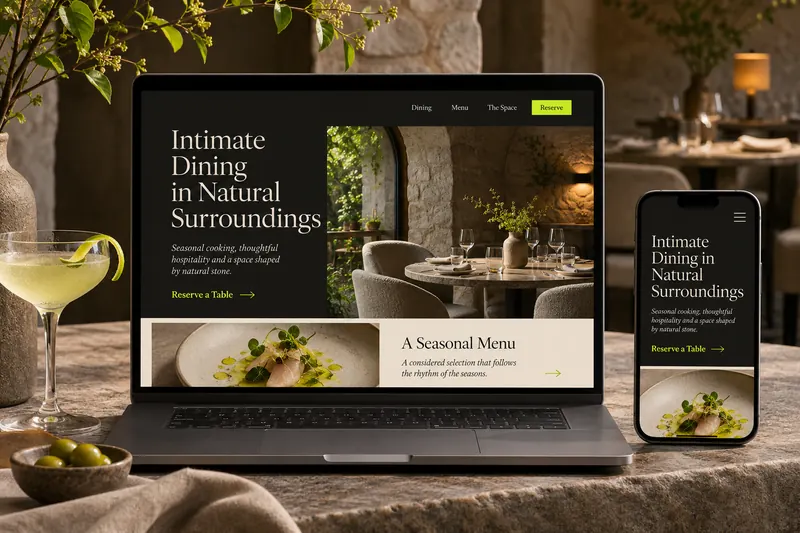
Frame the identity around a practice’s work
Atelier No. 9 is a fictional architecture practice. The exercise asks how a studio can signal attention to materials and detail before a visitor reads a project statement. An identity for this kind of practice must be legible in several settings: a drawing title block, a document shared with a consultant and a project image viewed on a phone. Set the starting brief around those settings. In a real engagement, the studio would supply drawings, site photographs and the applications its staff uses regularly. Those materials would help determine what needs a rule and what can vary by project.
Treat restraint as a set of choices
A quiet visual system still needs hierarchy. Give the studio name, project name and date different roles rather than making everything small. Set the order in which a reader should notice those details and use space to keep them distinct. In a presentation, a single strong project image can lead the page, with a short caption close enough to read alongside it. In a technical document, make the project number easy to locate even when the page is printed. These situations test whether restraint gives the material clarity or merely removes useful information.
Use material details to guide the art direction
A material sample offers texture, scale and evidence of how the practice makes choices. An unfinished edge or the junction between surfaces can show an idea more clearly than a wide photo alone. Build an image selection around useful pairs: a broad view to locate the detail and a close view to explain it. Keep descriptions specific, especially when an image is a rendering. For a real project, confirm which details can be shown and whether collaborators need attribution. A repeatable image approach lets the studio add work without making every project look the same.
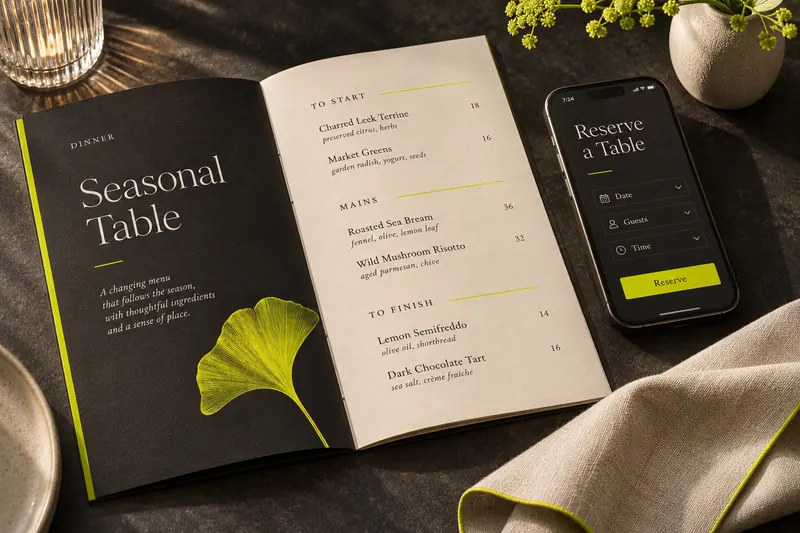
Test the name and wordmark in ordinary conditions
Set the studio name at a size close to what appears in an email signature or drawing corner. Check spacing around the punctuation and the number. See whether the name can be read on a light background, a dark image and an ordinary monochrome print. Consider whether a compact mark has a practical use or simply adds another asset to maintain. Record how to set the name when the logo file is unavailable. A plain-text convention helps team members refer to the studio consistently in proposals, file names and project credits.
Design a project sequence that shows decisions
For a portfolio page, start with a sentence about the challenge and a short fact list covering the kind of space and the role of the practice. Then choose a small number of images that make the design decisions visible. Show a plan if it explains circulation. Pair a detail with a caption that names the material or construction question. Use a final image to show how the parts relate at a larger scale. The aim is to make the project understandable to a prospective client who cannot read drawings fluently while still giving collaborators meaningful detail.
Build a family of practical templates
The first templates might be a proposal cover, a project sheet and a short presentation. Choose them by frequency of use and the effort it takes staff to assemble them today. Keep the grid simple enough that different project names and longer credits fit. A template should explain where an image can be cropped and what information may never be omitted. Test it with a project that has few photos and another with several contributors. A design that works only with a carefully prepared example is more difficult to use in ordinary practice.
Plan for a rollout with existing work
An architecture practice rarely replaces every project document at once. Start with public materials and templates for future work. Leave the original project record intact where changing it could create confusion. Identify who can update the website, who approves project credits and where the source files live. Give staff a small set of reference examples rather than a long deck with no application guidance. When two versions of a file coexist during a transition, label the current one clearly. The rollout should reduce small production decisions as more work moves into the system.
Define the questions a real client would answer
This concept illustrates a design direction and has no client or measured outcomes. To turn the approach into a live brief, ask which commissions the practice wants, what its strongest existing evidence is and which materials regularly cause confusion. Request a sample proposal, a drawing and a completed project page. Agree how the team will judge whether the new identity is usable. A useful first test is whether a staff member can prepare a project sheet and a prospective client can tell what the studio contributed. This sets a clearer goal than selecting a visual style in isolation.
Choose a useful first deliverable
A small practice may need a set of type and layout rules for proposals before it needs a large website. If that is the immediate constraint, specify two representative documents and the common information each must contain. Include a print test and a screen test in the review. If the same problem affects the portfolio, use the rules on a sample project page before expanding the scope. This shows whether the system translates between media and where a separate convention is necessary. Price the next phase when those requirements are visible.